

Sustainability has quietly moved from a nice-to-have to a line item for a lot of New Zealand businesses. Procurement teams are being asked harder questions, and staff notice what their workplace does and doesn't bother with. Coffee might seem like a small piece of that puzzle, but it's one of the few things nearly everyone in the building touches every day - which makes it a good place to start.
THE BIGGEST WIN IS THE CUP THAT NEVER GETS USED
The Packaging Forum estimates New Zealanders get through around 295 million single-use beverage cups a year. Most can't be recycled here - the plastic lining that stops the cup going soggy also stops it being processed with paper, so it heads to landfill. For one person buying five coffees a week, that's about 1,300 cups a year. Multiply it across a team of thirty.
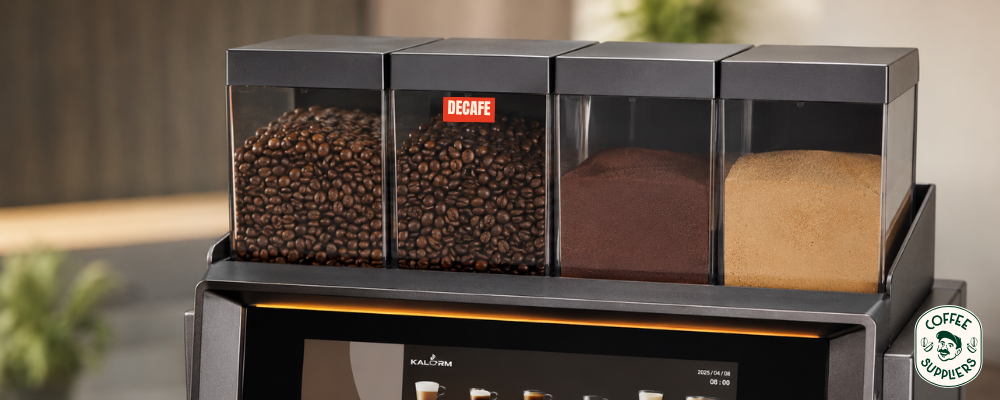
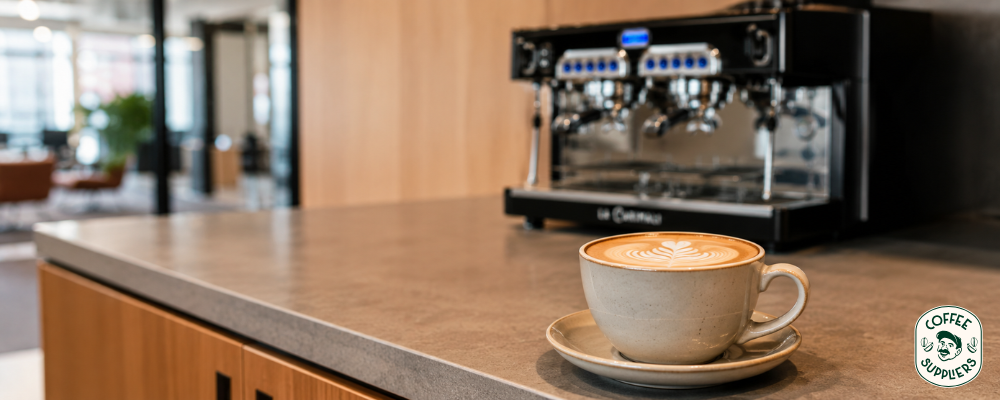
This is where a machine in the office kitchen does more for your waste footprint than any other single change. When good coffee is thirty seconds away, the takeaway run stops being the default - and every cafe coffee that doesn't happen is a cup that never gets made at all. People reach for a mug, the mug goes in the dishwasher, and the waste stream shrinks without anyone being nagged about it.
That's the thing about workplace sustainability generally: the changes that stick are the ones that don't rely on willpower. Asking thirty people to remember a keep cup works for a fortnight. Putting proper coffee in the kitchen works permanently, because it makes the sustainable option the easy one. It's also the rare sustainability measure your team will thank you for.
IF YOU DO STILL NEED CUPS: PE VS PLA
No office eliminates disposables entirely - site work, meetings, visitors, events. Standard PE cups are the familiar option: paper with a thin polyethylene lining, cheaper, and not recyclable in New Zealand. Compostable PLA cups use a plant-based lining instead and are a step up, with one condition worth knowing: PLA needs a commercial composting facility to break down, so it only delivers if you've got an organic waste collection that accepts it. Without one, it ends up in the same place as everything else.
That condition is the reason we're moving to PHA cups from September 2026. PHA is home compostable, meaning it breaks down in an ordinary garden compost or worm farm rather than needing an industrial facility. For most offices that removes the catch entirely - the cup composts wherever it ends up, instead of depending on infrastructure the building may not have. It's the difference between a cup that's compostable in theory and one that's compostable where you actually are.
Until then we supply both PE and PLA, and we'd rather you chose based on what your waste setup can genuinely handle than on what sounds best in a report.
WHAT TO ASK ABOUT YOUR BEANS
What certifications sit behind it? Fair Trade, Rainf forest Alliance and organic certifications cover different ground - broadly, what growers are paid and what goes onto the crop. Neither is a complete picture alone, but a supplier who can tell you what applies and what it means is a good sign. We offer Fair Trade organic beans for offices that want both covered.
What's the bag made of? Coffee packaging has to keep oxygen and moisture out, or the beans go flat before you get through them - which limits how far you can push recycled content without compromising the coffee. Our Sorrento range uses packaging with 30% post-consumer recycled material, about as high as you can go before barrier quality suffers. It's a real constraint, and any supplier claiming dramatically more is worth a second question.
THE BEST PACKAGING IS THE PACKAGING YOU DON'T USE
For higher-volume sites there's a better option than improving the bag: skipping it. We supply reusable 5kg and 9kg coffee tins in place of single-use bags - the tin comes back, gets refilled, and goes out again. The caveat is that tins suit offices getting through at least 10kg of beans a month, and that's about freshness rather than order sizes. Coffee is at its best in the weeks after roasting, so a site nursing a tin for months is drinking flat coffee by the end of it. Below that volume, smaller bags keep the coffee in better shape.
The same thinking runs through our warehouse, where cardboard cartons get reused until they give out. Unglamorous, but reuse beats recycling every time - recycling still costs energy, reuse costs almost nothing.
DON'T BIN THE GROUNDS
Used grounds are nitrogen-rich and compost beautifully, and a labelled bucket next to the machine is genuinely all the infrastructure required. A community garden nearby, a staff member with a vege patch, or an organic waste collection will take them. Some offices run a help-yourself bin for staff to take home, which costs nothing and tends to get used.
THE MACHINE ITSELF
The most sustainable machine is usually the one that lasts. A commercial-grade office coffee machine that's serviced properly runs for years, which beats replacing a cheaper unit every couple of years. Servicing does more than protect the coffee - it stops a machine being written off early over a fixable fault. Worth checking too whether yours has an eco or standby mode, and whether it's switched on. Plenty of offices leave machines at full readiness all weekend without realising there's a setting for it.
SORTING YOUR OFFICE COFFEE SETUP
None of this is dramatic, and that's rather the point. Sustainability in the office kitchen isn't one big gesture - it's a handful of small decisions that hold because they made things easier rather than harder. If you're weighing up what a proper in-house setup would look like for your team, including the beans, the servicing and what happens to the waste, we're happy to talk it through.