
If you're looking at getting an office coffee machine, you've probably already hit the first big question: what type of machine do we actually need?
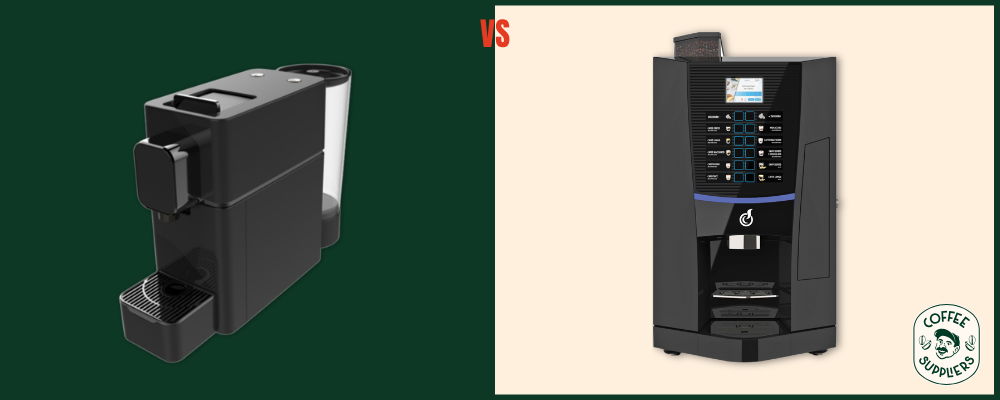
There are three main options for NZ workplaces - bean-to-cup automatics, traditional barista espresso machines, and pod (capsule) machines. Each has its place, but they solve very different problems. Here's how to figure out which one fits your office.
Bean-to-Cup Automatic Machines
These are the workhorses of most modern offices. A bean-to-cup machine grinds fresh beans and brews coffee at the push of a button. No barista skills required, no pods to buy, no mess to clean up beyond the basics.
The big win here is taste and cost. Because the beans are ground fresh for every cup, you get noticeably better flavour than pre-ground or pod coffee. Research suggests that coffee beans lose up to 60% of their aroma within 15 minutes of being ground, which is why that freshly ground cup tastes so much better.
On the cost side, bean-to-cup machines are significantly cheaper to run than pods. A pod can cost anywhere from 70c to over $1 per serve. With a bean-to-cup machine using quality beans, you're looking at from around 50c per cup for a black coffee - and that's using 100% arabica beans, not budget blends. Add milk, hot chocolate, or chai and it goes up slightly, but it's still well under what you'd pay for pods.
Most bean-to-cup machines also offer multiple drink options from a single machine - espresso, long black, cappuccino, latte, hot chocolate, and sometimes even chai latte.
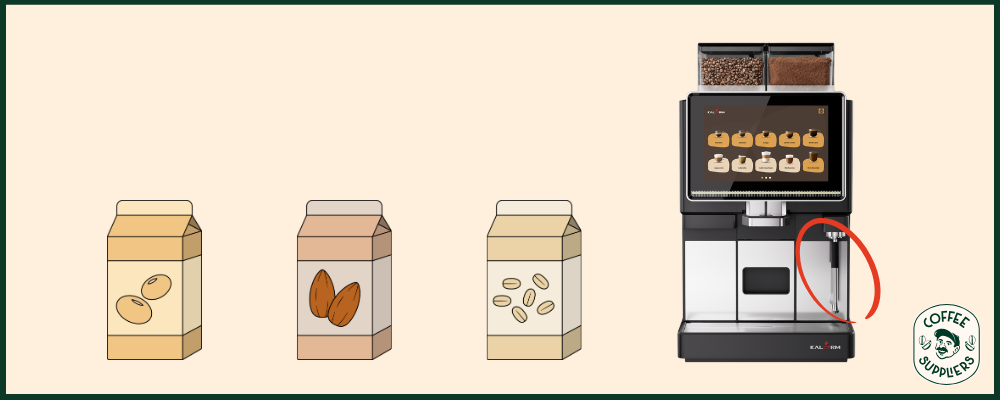
Within the bean-to-cup category, the main decision is actually milk type - fresh milk or powdered. Fresh milk machines give you a more authentic cafe-quality taste and often include a steam wand for frothing alternative milks like oat or soy. Powdered milk machines are easier to maintain and clean, with no fresh milk to manage. Both produce great coffee - it comes down to what matters more to your team.
For small-to-medium offices, machines like our Bianchi Gaia Style (powdered milk) or Kalerm O-Series (fresh milk with steam wand) handle the job well. For larger offices, the Bianchi Talia and Necta Krea Prime (both powdered milk) or the Kalerm Y-Series (fresh milk with steam wand) are built for higher volumes.
Best for: Offices of any size who want quality coffee, lower running costs, and minimal fuss. Choose fresh milk or powdered based on your team's preferences and cleaning capacity.
Traditional Barista Espresso Machines
These are what you'd see in a cafe - a traditional espresso machine with a portafilter, group heads, and steam wands. They make exceptional coffee, arguably the best of the three options, but they come with a catch: someone needs to know how to use them.
In an office setting, barista machines work best when you have a dedicated person (or a team of coffee enthusiasts) willing to make the drinks. Without that, the machine tends to get underused or, worse, used badly - which leads to wasted beans, inconsistent coffee, and frustrated staff.
They also require more cleaning and maintenance than a bean-to-cup. The grinder, portafilter, and group head all need regular attention to keep the coffee tasting right.
That said, if you've got a medium-to-large office with a real coffee culture, or a client-facing reception where presentation matters, a barista machine like our Carimali Cento can make a genuine impression. With dual steam wands and an automatic grinder, it's built for workplaces and hospitality venues that want the full cafe experience.
Best for: Larger offices, hospitality venues, or workplaces with dedicated coffee-making staff who want cafe-quality results.
Pod (Capsule) Machines
Pod machines are the simplest option. Pop in a capsule, press a button, and you've got a coffee in under a minute. No grinding, no mess, minimal cleaning.
The convenience is real, but so are the downsides. The per-cup cost is the highest of all three options - if your office is going through 30-40 coffees a day, the pod costs add up quickly. Over a year, a team of 20 people drinking two coffees a day could spend upwards of $10,000 on pods alone, compared to around $5,000-6,000 on beans through a bean-to-cup machine.
There's also the waste issue. While many pods are technically recyclable, most end up in landfill because the recycling process requires separating the aluminium or plastic from the coffee grounds - something most people don't bother doing.
And then there's taste. Pods deliver consistent coffee, but it's consistently average. The pre-ground coffee inside a pod simply can't match freshly ground beans for flavour and aroma.
Best for: Very small offices (under 10 people), kitchenettes with limited space, or as a backup machine alongside a primary bean-to-cup setup.
The Quick Comparison
Here's how the three stack up on the things that matter most to office managers:
Taste: Barista machine wins, followed closely by bean-to-cup, with pods trailing behind.
Convenience: Pod machine wins for simplicity. Bean-to-cup is a close second - still one-button operation. Barista machines require the most skill and time.
Cost per cup: Bean-to-cup is cheapest long-term (from 50c/cup). Barista machines are similar if beans are managed well. Pods are the most expensive (70c-$1+/cup).
Maintenance: Pods are lowest maintenance. Bean-to-cup machines need regular but straightforward cleaning (powdered milk models are easier than fresh milk). Barista machines need the most attention.
Variety: Bean-to-cup machines often offer the widest range of drinks from a single machine, especially models with hot chocolate and chai options built in.
What We Recommend for Most NZ Offices
For the majority of NZ workplaces, a bean-to-cup automatic machine hits the sweet spot. You get fresh, quality coffee at a reasonable cost per cup, with enough drink options to keep everyone happy - including non-coffee drinkers if you choose a model with hot chocolate or chai.
All of our machines come with free installation, servicing, and training - plus on-demand technical support if anything goes sideways. And you can try before you commit with a free trial to see which machine suits your team best.
Take our 60-second Machine Quiz to get a personalised recommendation.