
Walk into any NZ cafe and you'll hear it: "Can I get that on oat?" Alternative milks aren't a niche request anymore. They're mainstream. And if your office coffee machine can't handle them properly, you're leaving a chunk of your team out of the coffee conversation.
The problem is that most automatic office coffee machines aren't built for plant-based milks. Understanding why - and what to look for instead - could make a real difference to how your team feels about the coffee at work.
Why Alternative Milks Are Tricky for Office Machines
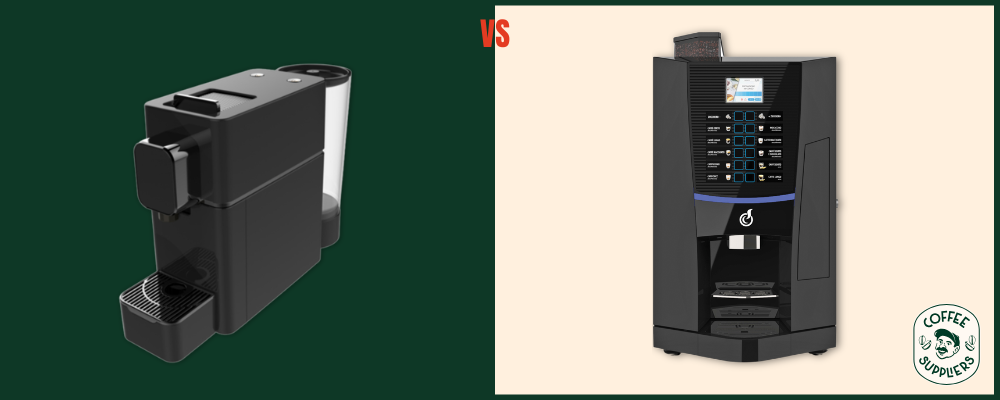
Most fully automatic office coffee machines use one of two systems to handle milk: an internal siphon system that draws fresh milk through tubing, or a powdered milk canister that mixes powder with hot water.
Neither works well with alternative milks.
Siphon systems are specifically calibrated for dairy milk. Plant-based milks have different fat and protein levels, which means they can curdle, separate, or produce thin, watery foam. Some manufacturers even advise against using alternative milks in siphon-based systems because they can damage the internal components over time.
Powdered milk machines avoid the issue entirely - but they don't offer any milk alternative at all. You get reconstituted milk powder or nothing.
So if a team member is dairy-free - whether by choice or necessity - most standard office machines simply don't cater for them. They're stuck with a long black while everyone else enjoys a flat white.
The Steam Wand Solution
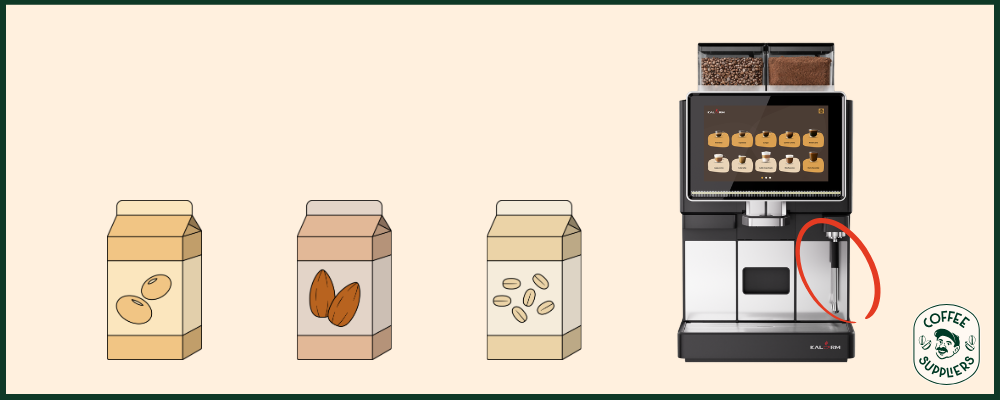
A steam wand changes the equation completely. It's the same tool baristas use in cafes - a wand that injects hot steam directly into a jug of milk, heating it and creating microfoam. Because you're frothing the milk externally in a jug, you can use whatever milk you like: oat, soy, almond, coconut, or regular dairy.
This is standard on barista machines, but it's rare on automatic office machines. Most bean-to-cup machines designed for offices don't include one. That's what makes our Kalerm O-Series and Kalerm Y-Series stand out - they're fully automatic bean-to-cup machines that also feature a steam wand. Your team gets one-button espresso, long black, or hot chocolate from the touchscreen, and anyone who wants a flat white on oat milk can froth it themselves in seconds using the wand.
The O-Series suits small-to-medium offices, while the Y-Series is built for medium-to-large teams. Both include a mini-fridge for fresh dairy milk, so regular milk drinkers still get automatic frothed coffee without touching the wand. Best of both worlds.
How Each Alternative Milk Froths
Not all plant-based milks are created equal when it comes to frothing. Here's what to expect with a steam wand:
Oat milk is the office favourite for good reason. It's the closest to dairy in terms of texture and taste, froths well, and produces a creamy microfoam that works for flat whites and lattes. Barista-specific oat milks have added stabilisers that make frothing even easier. It's sweet, neutral, and pairs well with espresso.
Soy milk has high protein content, which means it froths similarly to dairy and creates dense, stable foam. It steams faster than dairy though, so you need to watch the temperature - aim for around 55-60°C to avoid splitting. Soy has been the go-to alternative in NZ cafes for years and is a reliable choice.
Almond milk is lighter and more watery than oat or soy, which makes it harder to get really creamy microfoam. It works fine for a latte but you won't be pouring latte art with it. Use a barista blend for better results, as standard almond milk tends to produce large, unstable bubbles.
Coconut milk produces a rich, creamy foam thanks to its high fat content, but it can overpower the coffee flavour. It also gets thick quickly above 65°C, so keep the temperature lower than you would with dairy.
Why This Matters for Your Office
Plant-based milk is growing fast in New Zealand, and the trend is particularly strong among younger workers. If your office has a mix of ages and dietary preferences - which most do - having a machine that only handles dairy or powdered milk means you're not catering for everyone.
It's a small thing, but it sends a message. When someone has to bring their own milk from home because the office machine can't handle it, that's not a great experience. A machine with a steam wand solves that problem, and it means every person on your team can make the coffee they actually want to drink.
It also opens up the menu. With a steam wand, your office machine can do everything a cafe can - flat whites, cappuccinos, lattes, even a matcha latte if you've got the powder. Pair it with a machine that also dispenses hot chocolate and chai latte, and you've genuinely got something for everyone.
What to Look For
If alternative milks matter to your team, here's what to check when choosing an office coffee machine:
Does it have an external steam wand? This is the key feature. Internal siphon systems and powdered milk canisters won't cut it for plant-based milks.
Is it still fully automatic for standard drinks? You don't want to sacrifice convenience. The best setup is a machine that offers one-button operation for espresso and black coffee, with the steam wand as an additional feature for milk drinks.
Does it use fresh milk for dairy drinkers? Machines with a built-in mini-fridge for fresh dairy milk alongside a steam wand give you the most flexibility - dairy users get automatic frothed milk, and alternative milk users get the steam wand.
Not sure whether your team needs fresh milk or powdered milk? That's actually the first decision to make before choosing a machine - we've written a full breakdown to help you decide.
If your current office machine is leaving some of your team out in the cold, it might be time to upgrade to something that works for everyone.
Book a free trial and see the difference a steam wand makes.